Cross Country Vacation Sept./Oct. 2025-Post 25
Santa Fe Trail, Boot Hill Museum, Kansas

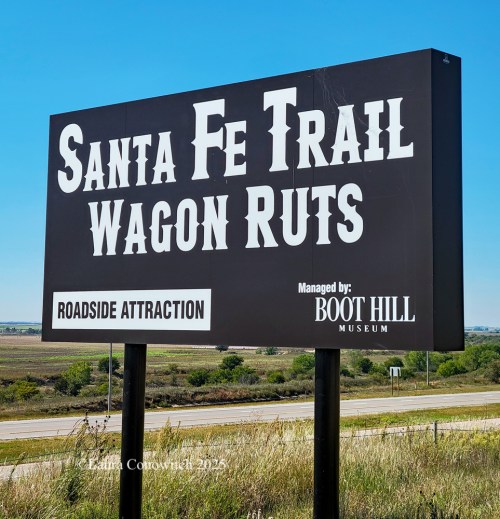
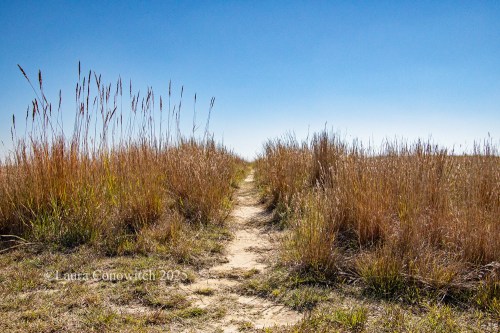
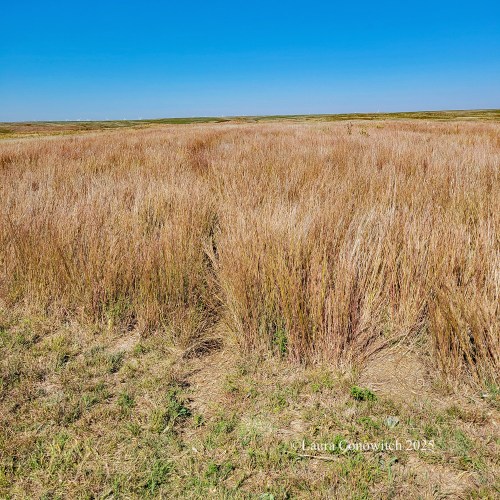
The Hubster and I hadn’t driven far out of Dodge City, about nine miles, when we came upon the Santa Fe Trail Wagon Ruts roadside attraction.

We weren’t looking for it.

We almost missed it.

But we stopped to check this out.

Boot Hill Museum, Dodge City, Kansas

*Clicking on a photo will give you a closer look!

Boot Hill Museum, Dodge City, Kansas

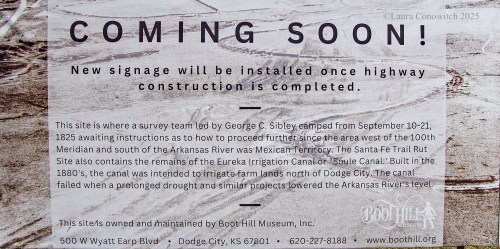
The site is undeveloped, but as you can see, from the sign above, there are plans for some development.

Boot Hill Museum, Dodge City, Kansas

The Santa Fe Trail served as the pioneer highway from 1821 to 1872 as a link from the east to Santa Fe, New Mexico. The trail allowed traders to move goods across the country safely and easily.

It was customary for the wagons to travel four abreast. This allowed for quicker circling in case of attack.

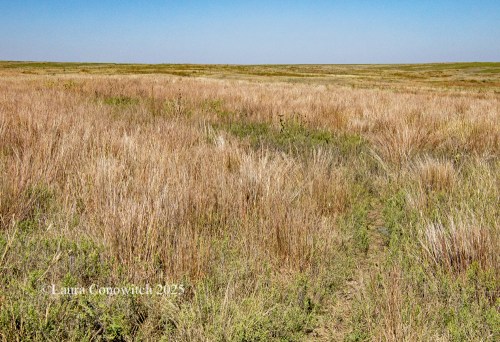
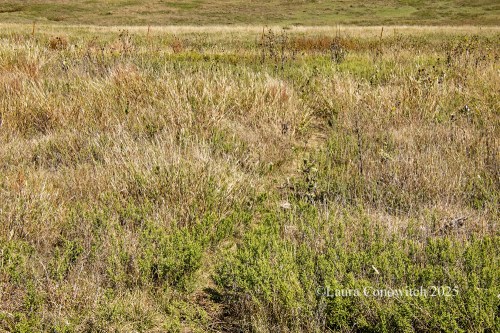
The ruts are still visible after almost 150 years.

Boot Hill Museum, Dodge City, Kansas

You can also see the remains of the Soule Canal.

The Soule Canal, listed on the National Register of Historic Sites, includes the Eureka Irrigating Canal. This ditch and canal were put under construction in 1883, by Asa T. Soule, a prominent Dodge resident.

The canal was intended to bring water from the Arkansas River to fields needing irrigation. Unfortunately similar projects upstream and prolonged drought led to the abandonment of the project. It however, goes down as a major human accomplishment of imagination and construction.

Boot Hill Museum, Dodge City, Kansas

Boot Hill Museum, Dodge City, Kansas

Boot Hill Museum, Dodge City, Kansas

I found a video that has an aerial view…so much the better to see the ruts!

See the world around you!

More Travel Posts:

Cross Country Vacation Sept./Oct. 2025-Post 24

Dodge City, Kansas-Part 4

Boot Hill Museum, Dodge City, Kansas

*Clicking on a photo will give you a closer look!

Boot Hill Museum, Dodge City, Kansas

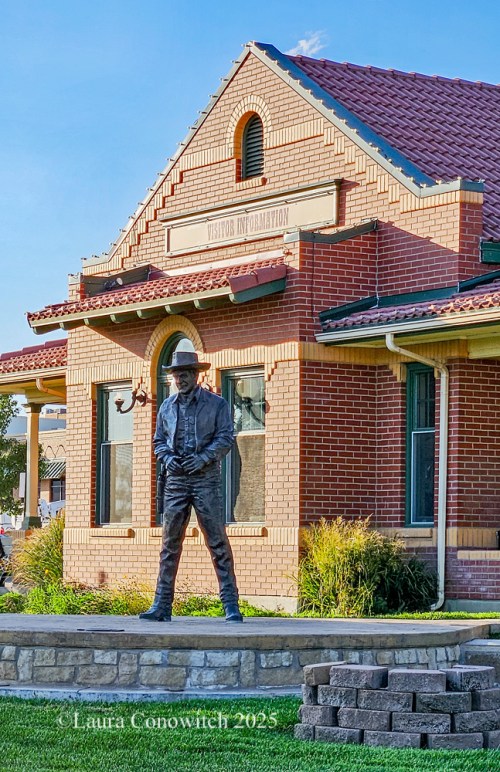
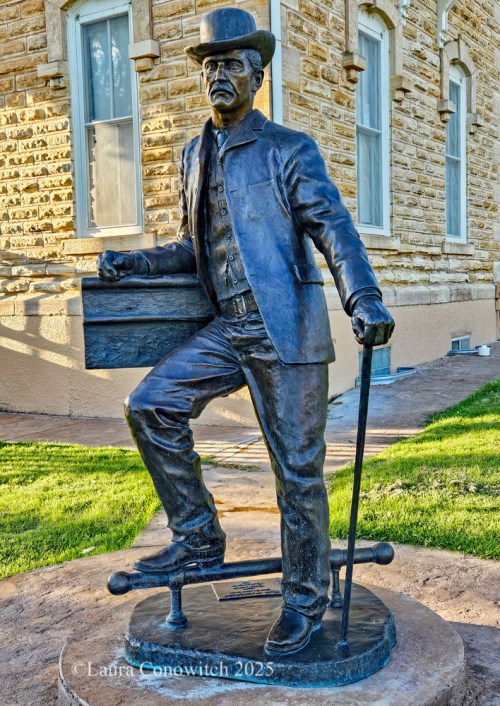
Dodge City has an Historic Dodge City Walking Tour featuring monuments and statues. The Hubster and I did not have time to take this walk, but we did see a couple of them.

Above is the life-sized bronze sculpture of James Arness character, Matt Dillon, from Gunsmoke.

Below is the life-sized bronze sculpture of Bat Masterson.

Boot Hill Museum, Dodge City, Kansas

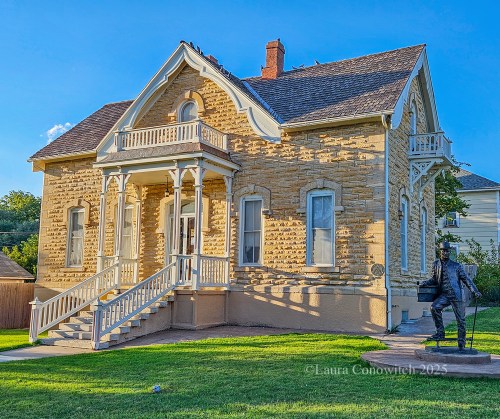
The Mueller-Schmidt House Museum
Listed on the National Register of Historic Places, 72000499

Built to be one of the most splendid homes in Dodge City, Ford County’s “Home of Stone” is the oldest house still on its original site and the only home in the city made from limestone.

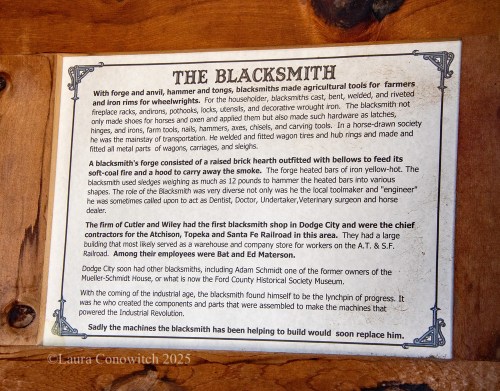
The “Home of Stone” was built in 1881 by John Mueller, the first bootmaker in old Dodge City, and a leading cattleman, hotel and bar owner. It was sold in 1890 to pioneer blacksmith Adam Schmidt. Two of Adam and Elizabeth Schmidt’s children lived in the house until 1960. Ford County purchased the house in 1965.

Original furniture from the Mueller and Schmidt families is featured, along with artifacts from the pioneers of Dodge City, including Robert M. Wright, Charles Rath, Bat Masterson, George M. Hoover, Wyatt Earp & Ham Bell.

Boot Hill Museum, Dodge City, Kansas

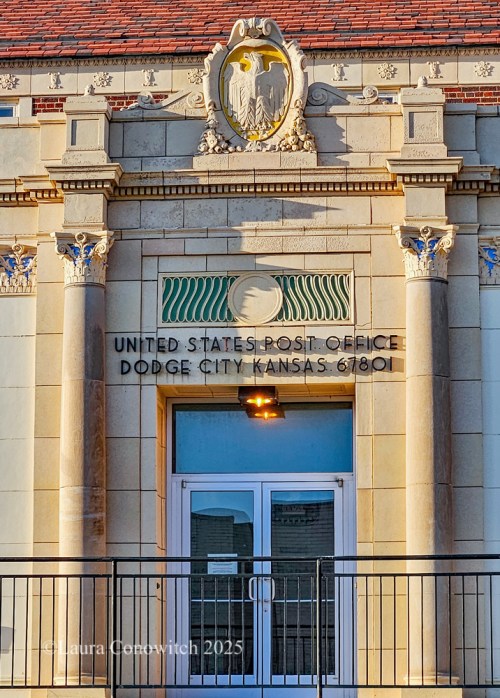
Dodge City Post Office

Boot Hill Museum, Dodge City, Kansas

Boot Hill Museum, Dodge City, Kansas

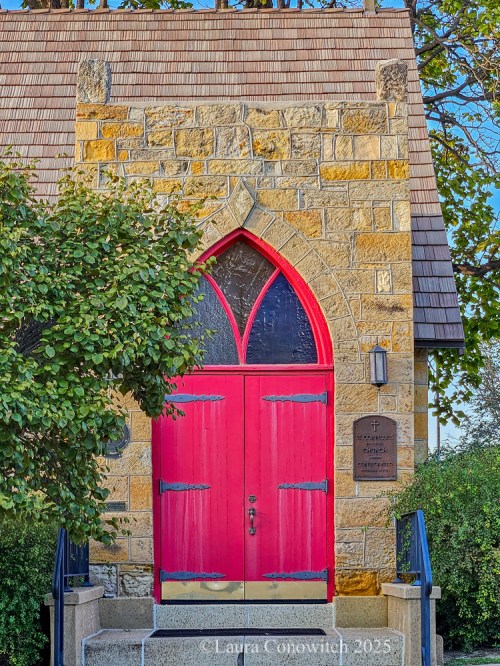
St. Cornelius’ Episcopal Church is the oldest church building in continuous use in Dodge City. It is situated on what, 100 years ago, was known as “Holy Hill”.

Boot Hill Museum, Dodge City, Kansas

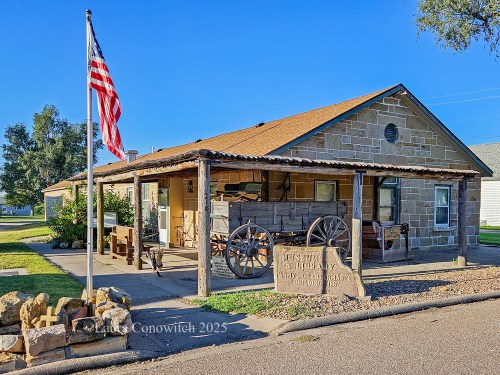
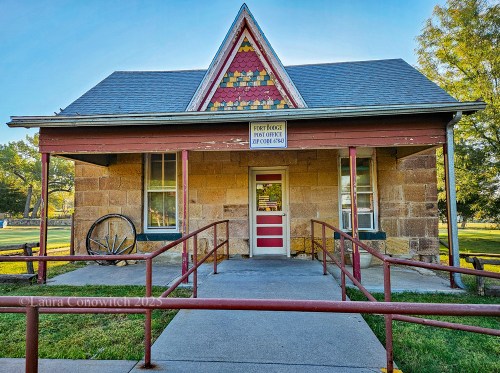
Founded in 1865, Fort Dodge is the oldest permanent settlement in this area of Kansas.

Fort Dodge was a pivotal fort during the Indian campaigns of 1868-69 and 1874-75. The Wet and Dry Routes of the Santa Fe Trail met here; the Fort Hays-Fort Dodge Trail ended here, and the Fort-Dodge-Fort Supply Trail began here. Millions of pounds of armaments and supplies were shipped south in trains of as many as 270 wagons.

It not only protected those traveling on the Santa Fe Trail, but provided supplies and a resting place for traders and buffalo hunters. The first buildings were sod and adobe, and some troops lived in dugouts. Once lumber arrived, wooden buildings were erected. At its greatest capacity, the fort boasted four companies of infantry.

Boot Hill Museum, Dodge City, Kansas

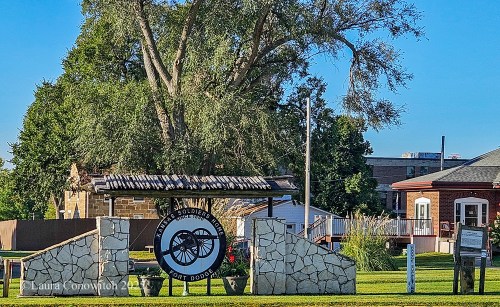
The fort was abandoned in 1882. Eight years later, Fort Dodge was deeded to the state for use as the Kansas Soldiers Home. Today, it still serves this purpose as a retirement community and nursing facility for retired Kansas veterans. A historic library and self-guided walking tour tell the fort’s history to visitors. Many of the original buildings are still in use, and not open to the public.

Fort Dodge Museum and Library – Army Quartermaster Building 1867

Boot Hill Museum, Dodge City, Kansas

This building, and a few surrounding, served as storehouses and offices for post headquarters and for the quartermaster. The bakery had two ovens and could bake 500 rations of bread each day.

Major Henry Douglas, in command, and Lieutenant George A. Hesselberger, quartermaster, were severely reprimanded by General R. B. Marcy for reckless extravagance in constructing buildings grand enough ‘for the national capitol’.

Boot Hill Museum, Dodge City, Kansas

At Fort Dodge we secured a few supplies such as fresh milk and baker’s bread-sweet and delicious. The water was good and refreshing.
Mrs. Frank D. Baldwin
September, 1867

Boot Hill Museum, Dodge City, Kansas

Boot Hill Museum, Dodge City, Kansas

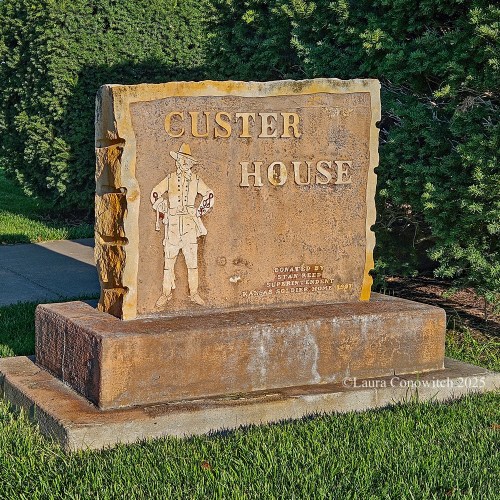
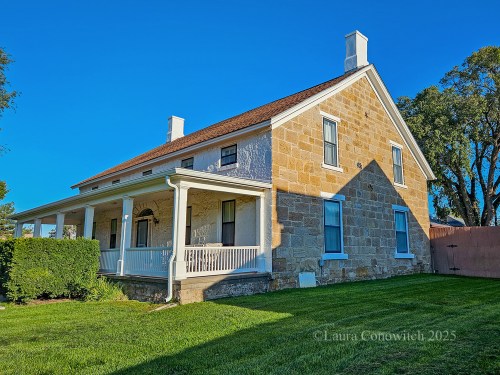
The commanding officer’s quarters was one of the last stone structures to be built at Fort Dodge. In the years before it was completed the officer and his family lived near the river in a four-room dugout, three feet below ground and four feet above.

‘The houses are more picturesque than elegant. We are living somewhat in the manner of prairie dogs. Mrs. Henry T. Douglas; February 3, 1867.’

This one-and-a-half story building contains a spacious center hall with two large rooms on each side. The attached kitchen forms an ell. The lower level was heated with fireplaces. The upper story has four rooms with windows which may have served as gun ports and can be seen just above the porch line. There is a servants’ quarters above the kitchen.

Boot Hill Museum, Dodge City, Kansas

The stone building has been called Custer House for many years. Although Brevet Major General George A. Custer never was stationed at Fort Dodge he did lead the Seventh Cavalry from here to the Battle of the Washita.

Boot Hill Museum, Dodge City, Kansas

Boot Hill Museum, Dodge City, Kansas

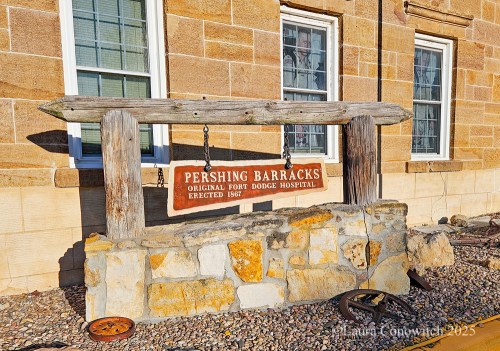
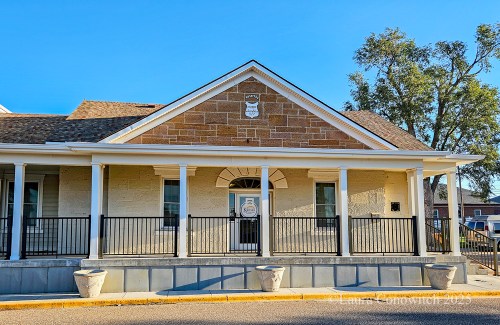
The first post hospital was built in 1865 of sod. Poor drainage, damp conditions, and rodent infestation made the building unsatisfactory. This one-story stone was built and provided a ward of twelve beds, a dispensary, and other facilities. It was heated by stoves and lighted with candles. African American troops were cared for in a separate five bed facility.
At first, the building was a hospital, and then a barracks. Now, it houses the Commission on Veterans Affairs.

Boot Hill Museum, Dodge City, Kansas

Diarrhea was the most common complaint, but ailments from abscesses to wounds were treated. Cholera swept through the Kansas forts carried by soldiers marching from Missouri to New Mexico. Thirty cases occurred at Fort Dodge in July of 1867. Twenty people died including Mrs. Isadore Bowman Douglas, wife of the commanding officer. Major Henry Douglas and their baby son also were infected but recovered.

Boot Hill Museum, Dodge City, Kansas

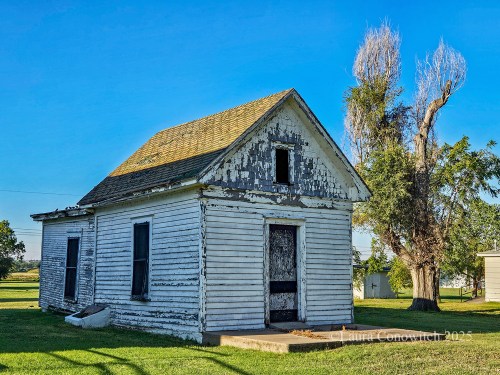
The Dead House (morgue) was used as temporary storage for bodies, especially during the winter months when the ground was frozen. This one has been relocated just west of the hospital.

Boot Hill Museum, Dodge City, Kansas

The Junior Officers’ Quarters, built ca. 1870, was an officers’ quarters and its twin served as the post for the quartermaster and family.

Boot Hill Museum, Dodge City, Kansas

Boot Hill Museum, Dodge City, Kansas

Boot Hill Museum, Dodge City, Kansas

Boot Hill Museum, Dodge City, Kansas

Boot Hill Museum, Dodge City, Kansas

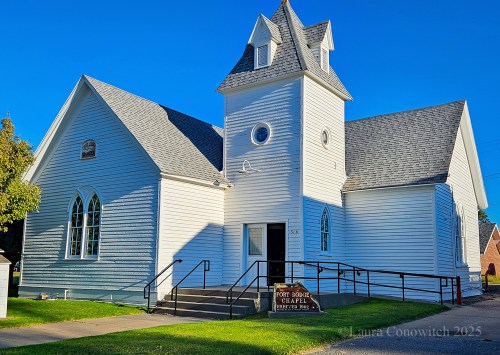
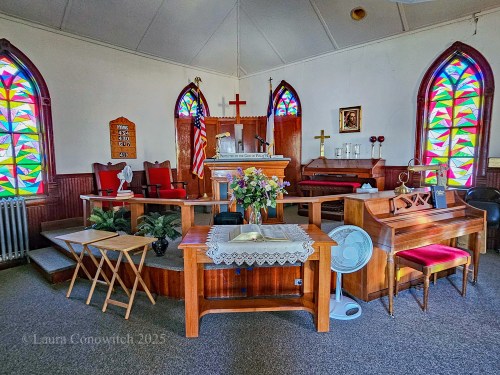
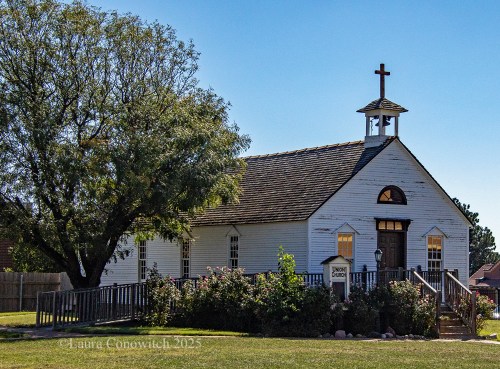
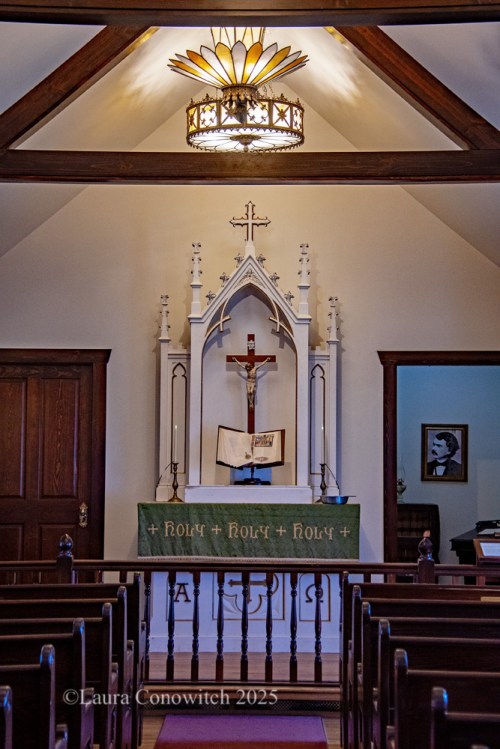
The Fort Dodge Chapel was built in 1902. It continues to be an active place of worship.

Boot Hill Museum, Dodge City, Kansas

Boot Hill Museum, Dodge City, Kansas

See the world around you!

More Travel Posts:

Cross Country Vacation Sept./Oct. 2025-Post 23

Front Street, Dodge City, Boot Hill Museum, Kansas-Part 4

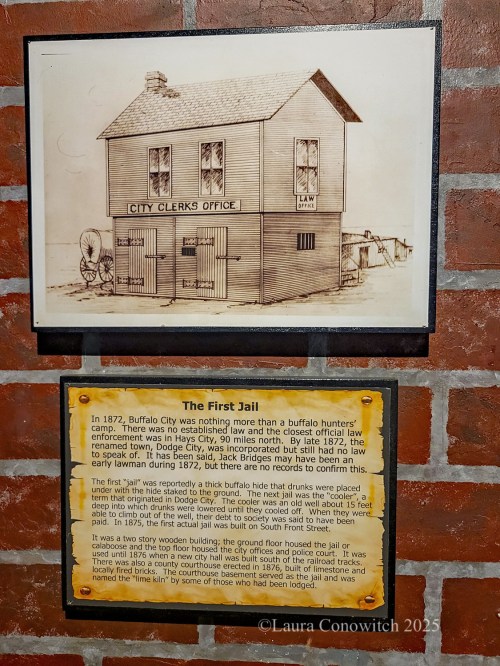
During Dodge City’s first four months of existence in 1872, the town grew to a population of slightly less than 200, and there were at least 12 untimely deaths; 1873 would bring at least 24 more. Many did not take what law there was seriously. The Atchison Daily Champion wrote in 1876 that Dodge City, “was infested principally with gamblers, horse thieves, prostitutes, and murderers, who look upon the law as a huge joke. The arm of the law is palsied and hangs powerless by the side of Justice, who stands away in the background like a statue of a forlorn and helpless exile. Horse thieves, burglars, disturbers and even murderers go at large.”

Boot Hill Museum, Dodge City, Kansas

*Clicking on a photo will give you a closer look!

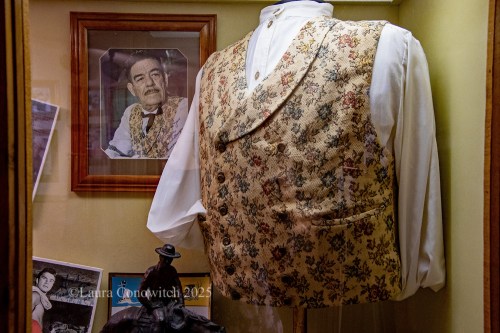
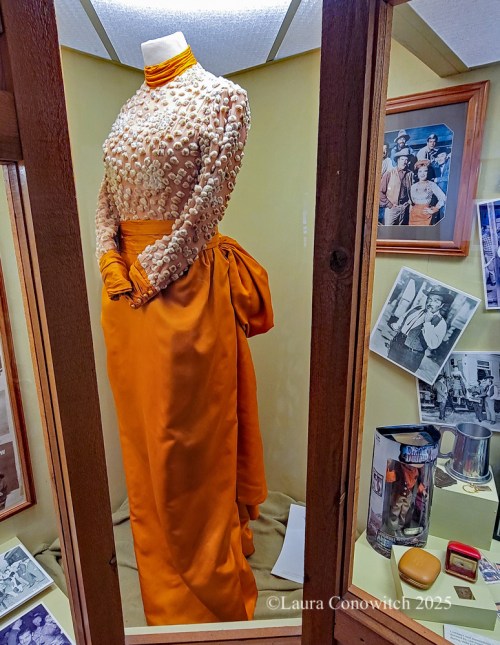
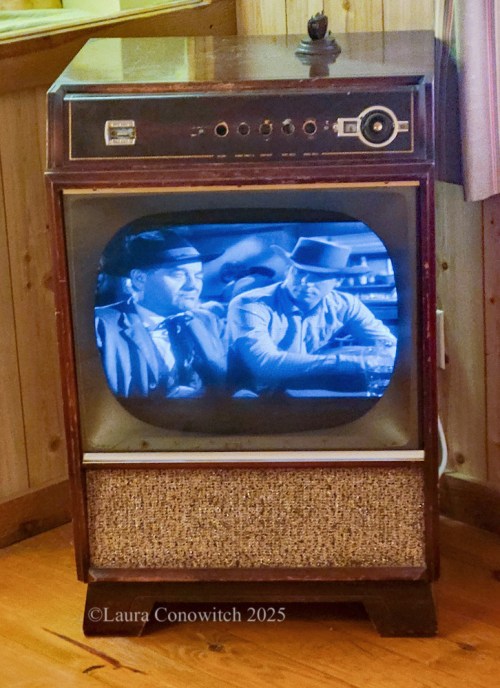
Continuing our stroll on Front Street, Dodge City, Kansas (from the previous post), we come upon a fun Gunsmoke display. The iconic television series centered on Dodge City, Kansas, in the 1870s, during the settlement of the American West. I grew up watching Gunsmoke. Maybe you did too.

Boot Hill Museum, Dodge City, Kansas

Boot Hill Museum, Dodge City, Kansas

Boot Hill Museum, Dodge City, Kansas

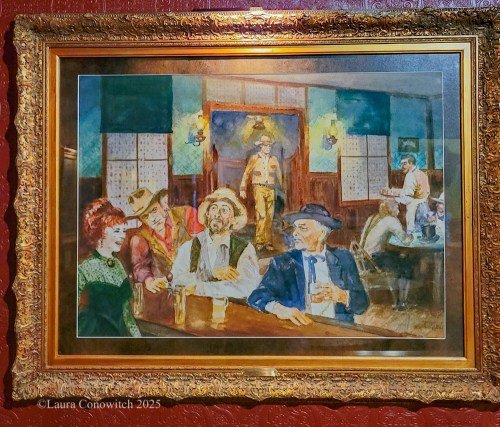
Buck Taylor, who played the character “Newly” on Gunsmoke, created this painting of the Long Branch Saloon:

Boot Hill Museum, Dodge City, Kansas

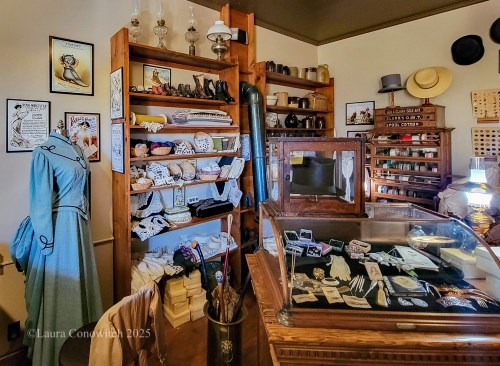
A quick visit to the Dry Goods store:

Boot Hill Museum, Dodge City, Kansas

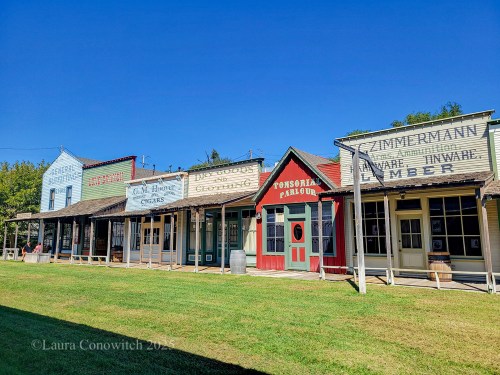
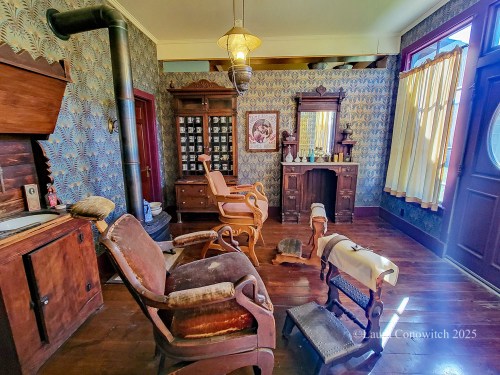
The Tonsorial Parlour was where cowboys and buffalo hunters could get a haircut, shave, bath, and have their teeth pulled.

The straps in front of the chairs are called “strops” and have a rough surface for sharpening razors. Shaving mugs were personalized with names and occupations of regular customers and were stored until their next visit. A gauge of the success of a barber was the number of personalized shaving mugs on his shelves. Though the tools of the trade were standardized, many barbers were “jack-of-all-trades” with various skill levels. Many moonlighted at other jobs or offered hot baths in the back for a quarter to make ends meet. One of the proud professionals was Dodge City barber, George Dieter, who advertised himself as “the eminent tonsorial artist of the Arkansas Valley”.

Boot Hill Museum, Dodge City, Kansas

Boot Hill Museum, Dodge City, Kansas

Boot Hill Museum, Dodge City, Kansas

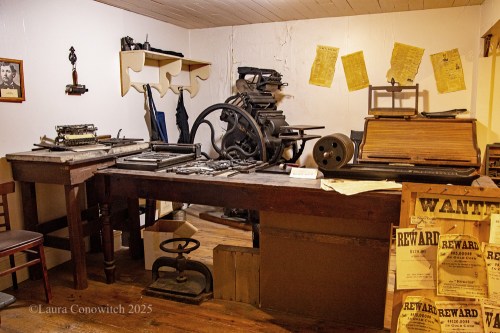
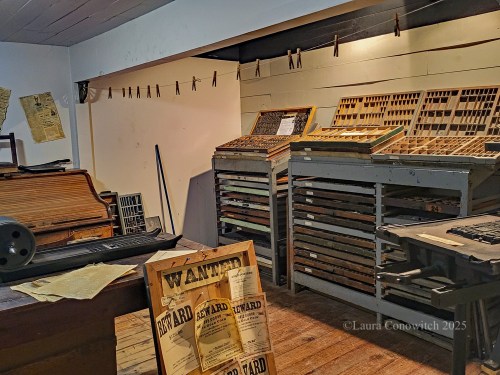
The print shop:

Boot Hill Museum, Dodge City, Kansas

Boot Hill Museum, Dodge City, Kansas

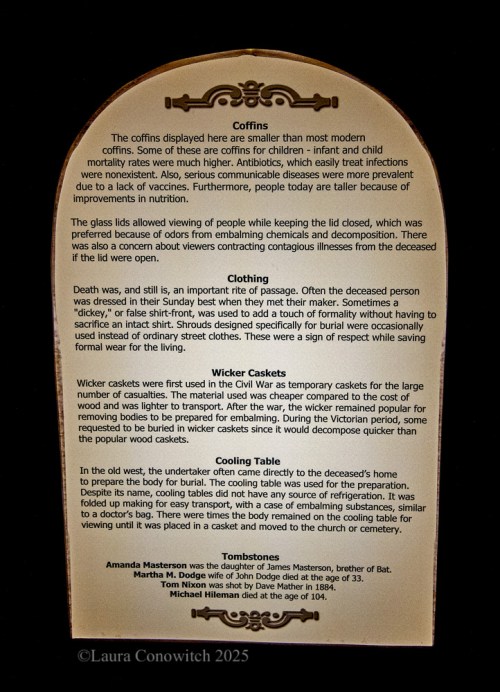
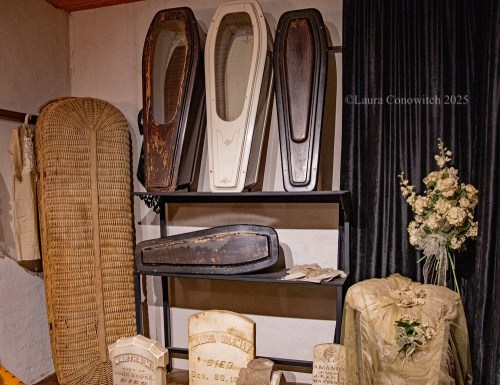
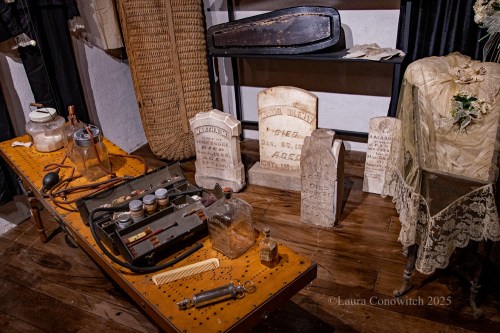
The Undertaker’s shop:

Boot Hill Museum, Dodge City, Kansas

*Remember, clicking on a photo, and then clicking on the i in the lower right, will give you a closer look and you will be able to read easier if you wish.

Boot Hill Museum, Dodge City, Kansas

Boot Hill Museum, Dodge City, Kansas

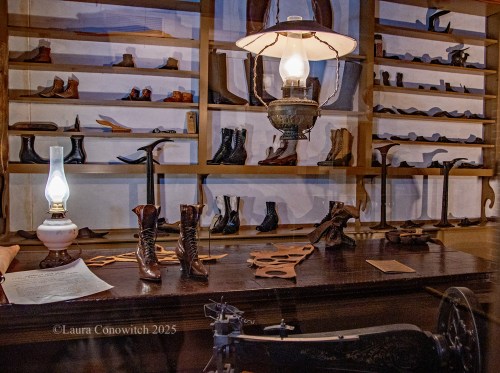
Following the Civil War, men arrived out west wearing low heeled stovepipe boots or military issue cavalry boots. Neither style suited the cowboys who spent 10 to 12 hours in the saddle. To satisfy the drovers needs, the boot was made to feature round toes, reinforced arches and higher heels that kept the boots from slipping through the stirrups. The new style became known as the Coffeyville boot because it originated in Coffeyville, Kansas. It also made the cowboy feel taller and gave him more swagger when he walked.

John Mueller immigrated to the United States in 1855 from Germany. He was wounded twice in the Civil War. Afterwards, he became an expert boot maker in St. Louis. He moved to Kansas and became friends with Buffalo Bill Cody and Wild Bill Hickok.

He opened his boot shop in Dodge City in 1874, and sold and repaired ready-made boots from $8 to $18.

In 1877, Mueller merged his business with another shoe craftsman, Walter Strater. They kept as many as six boot makers busy. Strater oversaw the shop while Mueller did the cutting and bookkeeping.

In 1881, Mueller sold out of the boot business and took up ranching.

John Mueller – “Gave perfect fits, performed excellent work and used nothing but the best material”.

Boot Hill Museum, Dodge City, Kansas

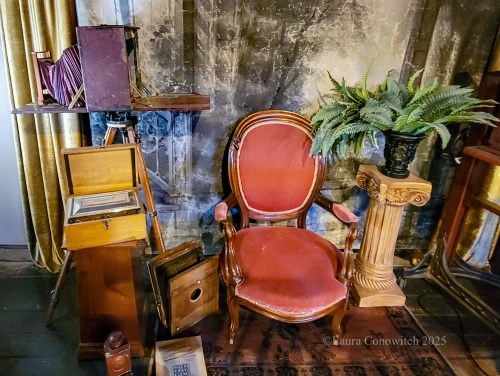
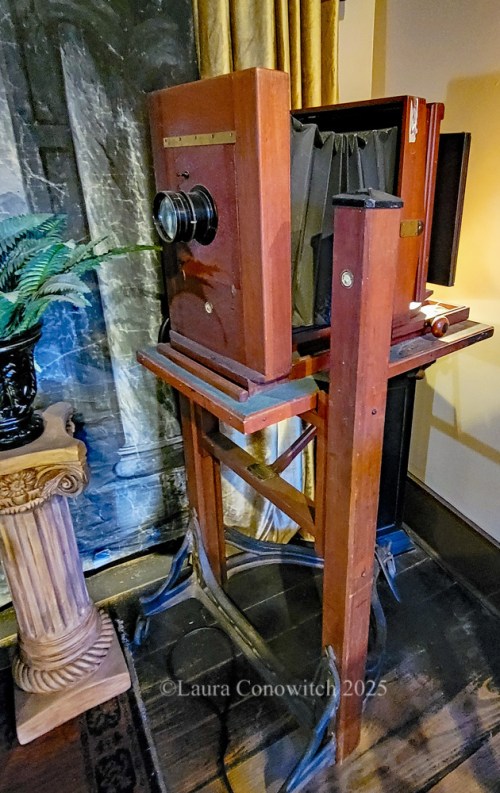
The photographer’s shop:

Boot Hill Museum, Dodge City, Kansas

Boot Hill Museum, Dodge City, Kansas

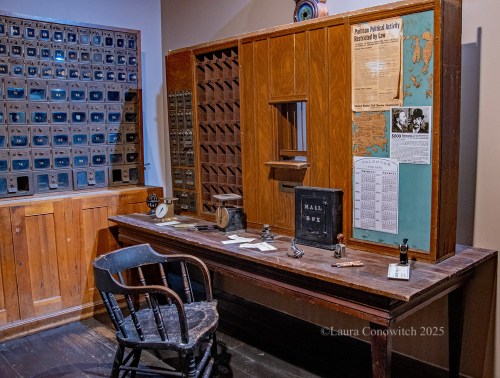
The U.S. Army built the first post office in 1851 at Fort Atkinson six miles west of Dodge City. In 1865, the Army established the county’s second at Fort Dodge. On September 3, 1872, this office was moved to Dodge City to become the city’s first post office.

The relocation is why the city is called “Dodge City” rather than “Buffalo City”. Another town in Kansas already had the name “Buffalo”.

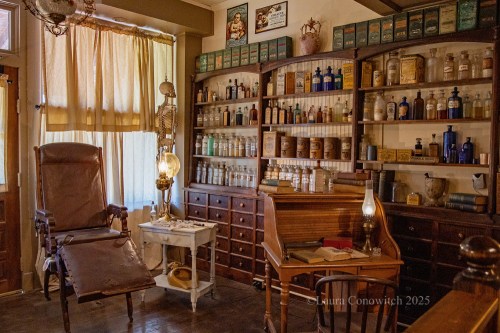
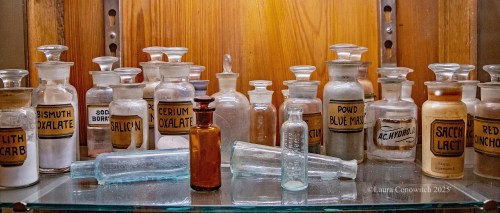
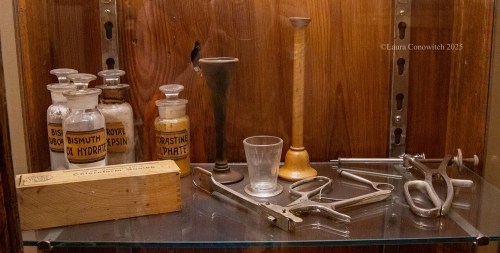
The City Drug Store housed Dodge City’s first post office at Front Street. The first postmaster was Herman J. Fringer.

Boot Hill Museum, Dodge City, Kansas

The bank:

Boot Hill Museum, Dodge City, Kansas

Boot Hill Museum, Dodge City, Kansas

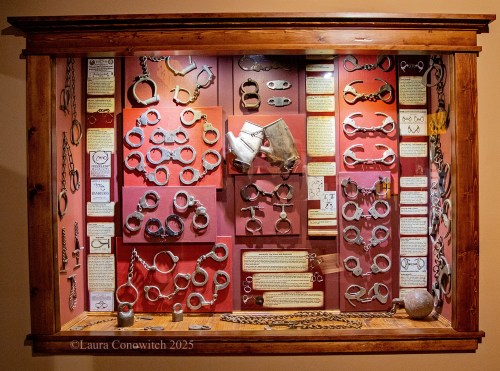
Just in case it is necessary to restrain you:

Boot Hill Museum, Dodge City, Kansas

Boot Hill Museum, Dodge City, Kansas

Boot Hill Museum, Dodge City, Kansas

Boot Hill Museum, Dodge City, Kansas

Boot Hill Museum, Dodge City, Kansas

Boot Hill Museum, Dodge City, Kansas

Boot Hill Museum, Dodge City, Kansas

Boot Hill Museum, Dodge City, Kansas

Boot Hill Museum, Dodge City, Kansas

Boot Hill Museum, Dodge City, Kansas

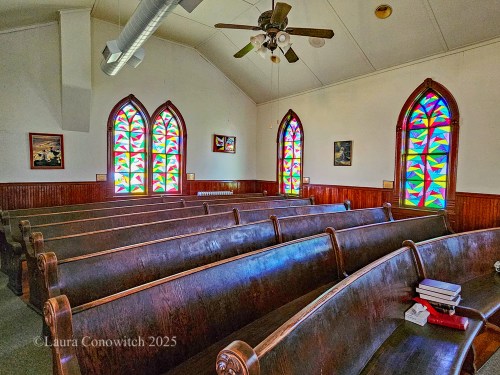
Reverend Ormond Wright arrived in Dodge City in early 1877. The very evening that he arrived, he performed the burial on Boot Hill of a saloon girl who had passed away.

Wright was instrumental in the building of Union Church, the first nondenominational place of worship in Dodge City. He convinced Wyatt Earp and Bat Masterson to be deacons. He welcomed people of all backgrounds, including the store owners and families, cowboys, gamblers, and dance hall girls.

On Monday mornings, he could be seen entering the saloons to cash in the gambling chips that had been left in the offering plate at Sunday services.

Wright was friends with Dora Hand, songstress of the Lady Gay Saloon, and invited her to sing at Saturday evening services. Her beautiful voice packed the house of worship.

Boot Hill Museum, Dodge City, Kansas

Boot Hill Museum, Dodge City, Kansas

See the world around you!

More Travel Posts: